

















FRP gratings offer a range of advantages over galvanised steel and stainless steel gratings:
- Corrosion resistance. FRP is extremely resistant to corrosion. This characteristic makes it an excellent choice for chemically aggressive environments. FRP gratings withstand a wide range of acidic and alkaline chemicals for long periods, across a good temperature range.
- FRP gratings are much lighter than steel gratings, reducing the load on underlying structures and making them easier to install. This is particularly important in all applications where weight is a critical factor.
- Electrical insulation. Unlike steel, FRP does not conduct electricity. This is a significant advantage in power generation plants, electrical stations and substations, railway lines, and production sites where high-voltage electric current is present. It ensures the safety of operators and users from the risk of electrocution and eliminates earthing costs.
- FRP gratings require less maintenance than steel gratings. They do not need repainting or treatment to prevent corrosion, including galvanic corrosion.
- Service life. Thanks to their corrosion resistance, FRP gratings tend to last longer than traditional steel gratings in many environments.
- Non-magnetic. Unlike steel, FRP is non-magnetic and can be used in environments where it is important to avoid interference.
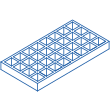
FRP gratings can be supplied with different thermosetting resins and used for a variety of applications (walkways, platform decking, electrical protection panels, steps, etc.).
